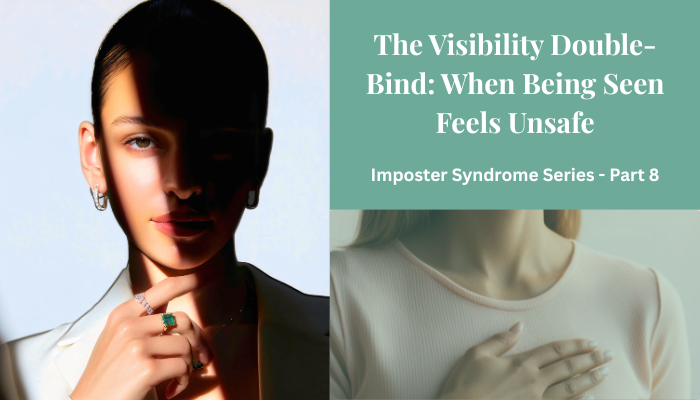
The Visibility Double Bind: When Being Seen Feels Unsafe

You want to contribute, grow, and be recognized, but your body says "visibility is not safe." The visibility double bind is the internal conflict many quiet high achievers experience when success requires being seen, yet visibility activates the nervous system as a threat. Learn why this happens and how to begin releasing this pattern through nervous system regulation.

Continue ReadingThe Visibility Double Bind: When Being Seen Feels Unsafe

The Superwoman Pattern: Why Capable Women Feel They Can Never Rest

You carry everything for everyone and feel guilty when you rest. The Superwoman Pattern links worth with usefulness - teaching you that safety depends on staying capable and minimizing your own needs. You look steady to the outside world, but inside you're exhausted. Learn why this survival strategy once kept you safe, and how to begin separating your worth from what you carry.

Continue ReadingThe Superwoman Pattern: Why Capable Women Feel They Can Never Rest

Natural Genius Imposter Syndrome: Why Effort Feels Like Failure

You're learning a new system at work and everyone else seems to pick it up immediately. You're on your third tutorial, and instead of thinking 'I'm learning,' you're thinking 'What's wrong with me?' The Natural Genius pattern makes effort feel like failure. When your identity is built around ease and excellence, struggle feels like exposure. Learn why this happens and how to reframe effort as intelligence in motion.

Continue ReadingNatural Genius Imposter Syndrome: Why Effort Feels Like Failure

The Expert Trap: Why “Never Knowing Enough” Keeps You Stuck

You've taken every course, read every book, and still feel unprepared to share your expertise. The Expert Trap convinces you that true authority requires endless preparation - one more certification, one more study, one more proof of worthiness. You're gathering credentials while the world waits for your voice. This pattern keeps smart women silent at the exact moment their knowledge could change lives. Learn why expertise feels unsafe and how to step into authority without perfection.

Continue ReadingThe Expert Trap: Why “Never Knowing Enough” Keeps You Stuck

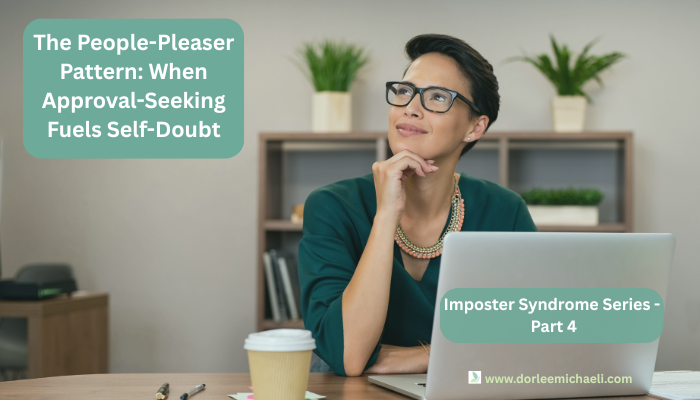
The People-Pleaser Pattern: When Approval-Seeking Fuels Self-Doubt

You say yes when you want to say no because disappointing someone feels dangerous. You're seen as helpful and reliable, but rarely as a leader. Boundaries feel selfish, and you measure your worth through others' approval. The People-Pleaser pattern keeps you small - always available, never prioritized. Learn why approval-seeking fuels self-doubt and how to build worth that doesn't depend on making everyone happy.

Continue ReadingThe People-Pleaser Pattern: When Approval-Seeking Fuels Self-Doubt

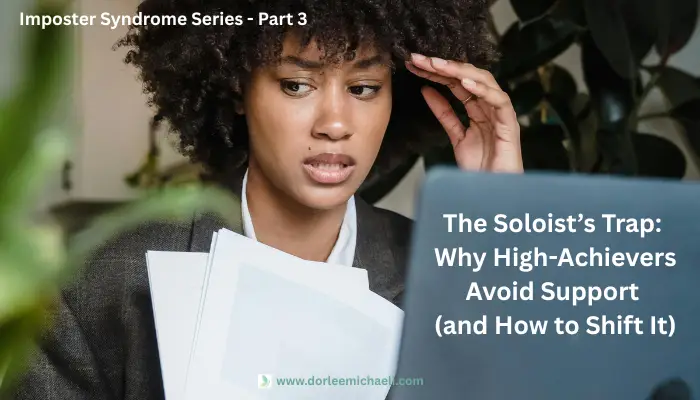
The Soloist’s Trap: Why High-Achievers Avoid Support (and How to Shift It)

Asking for help feels like admitting weakness. You'd rather struggle alone than risk looking incompetent, even when collaboration would make everything easier. The Soloist pattern isolates you at the moment when connection could actually accelerate your growth. You appear self-sufficient to the world, but inside you're carrying everything alone. Learn why asking for help feels dangerous and how to shift from isolation to strategic collaboration.

Continue ReadingThe Soloist’s Trap: Why High-Achievers Avoid Support (and How to Shift It)

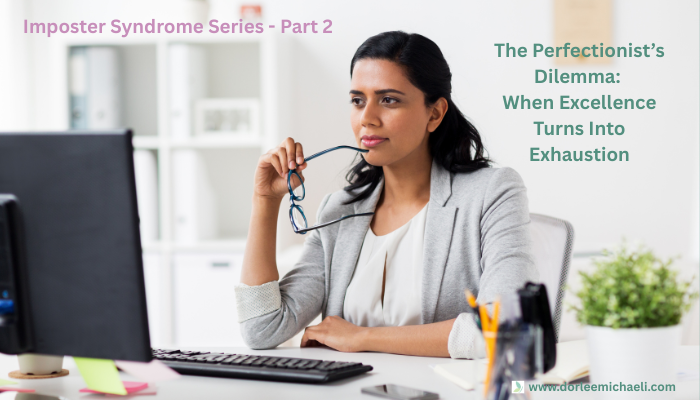
The Perfectionist’s Dilemma: Success Without Satisfaction

You can't stop tweaking, revising, obsessing over details. 'Good enough' feels impossible because anything less than perfect feels like failure. Perfectionism isn't about excellence - it's about fear. When mistakes feel dangerous, you become trapped in endless revision cycles, unable to ship, send, or share your work. Learn why perfectionism develops and how to release the grip it has on your productivity and peace of mind.

Continue ReadingThe Perfectionist’s Dilemma: Success Without Satisfaction

Why Smart Women Still Feel Like Frauds (and What You Can Do About It)

You're objectively accomplished - degrees, promotions, expertise others seek - yet a voice whispers you're a fraud who got lucky. Why do smart women dismiss their achievements as coincidence or deception? Imposter syndrome isn't about intelligence; it's a survival response where success feels like a spotlight on hidden flaws. Your nervous system equates visibility with vulnerability, keeping you proving yourself endlessly. Discover the roots in early conditioning and how EMDR rewires this fraud alert for genuine confidence.

Continue ReadingWhy Smart Women Still Feel Like Frauds (and What You Can Do About It)